

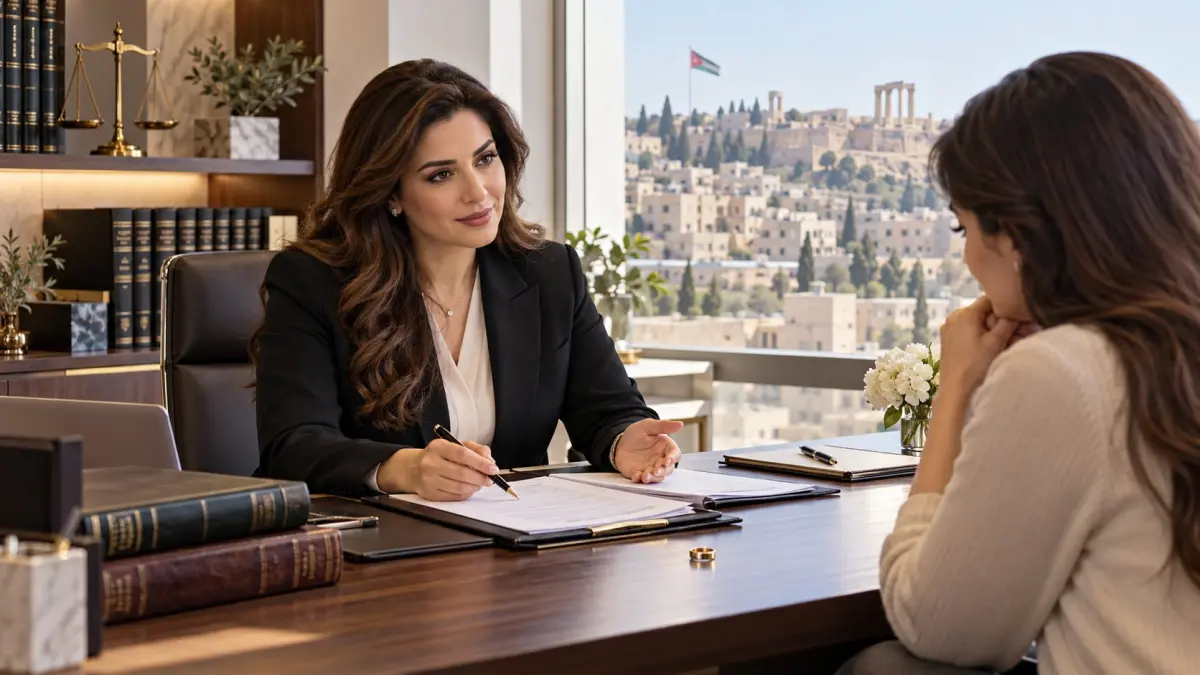

best divorce lawyer jordan
Best Divorce Lawyer in Jordan: A Complete Guide to Divorce, Custody and Family Rights
Going through a divorce can be one of the most challenging experiences in a person's life. Beyond the emotional impact, separation may involve important decisions about children, financial responsibilities, marital property, and future legal rights.
If you are searching for the best divorce lawyer in Jordan, choosing a qualified attorney who understands your circumstances and the applicable law can help you approach these decisions with greater clarity.
Many individuals search for an experienced female divorce lawyer in Amman, a trusted Sharia lawyer, or professional advice concerning divorce, alimony, child custody, and marital financial rights.
This guide explains the legal considerations involved in divorce in Jordan, the documents you may need, and how professional representation can help you understand your options.
1. Understanding Divorce Law in Jordan
Divorce and related personal status matters in Jordan are governed by the laws applicable to the individuals concerned.
For Muslim marriages, Jordanian Personal Status Law No. 15 of 2019 provides important rules concerning marriage, divorce, judicial separation, financial obligations, custody, and related rights.
Other legal frameworks and competent courts may apply depending on the parties' religious and personal status circumstances.
For matters falling within the jurisdiction of the Sharia courts, different forms of marital dissolution may involve different legal requirements and consequences.
Understanding these distinctions is important before beginning legal proceedings or signing an agreement.
Official information about the Sharia judiciary and relevant legislation is available from the Jordanian Department of the Chief Justice.
2. What Should You Know Before Starting Divorce Proceedings?
Before deciding how to proceed, it is useful to understand your legal circumstances rather than relying on information that applies to another family.
Important questions may include:
- What is the legal status of the marriage?
- Which court or authority has jurisdiction?
- What documents support the marriage and the relevant claims?
- Are there financial rights that require consideration?
- Are children involved?
- Are there existing maintenance or custody arrangements?
- Is a lawful agreement or reconciliation process possible?
An experienced divorce lawyer in Amman can help identify the relevant issues and explain which procedures may apply.
Why Early Legal Advice Matters
A decision made before understanding the legal consequences of divorce can affect financial rights and future arrangements.
For this reason, obtaining legal guidance before signing a settlement or waiving a potential right can be particularly important.
3. Divorce, Judicial Separation and Other Legal Procedures
Not all forms of marital dissolution follow the same legal process.
In relevant Muslim personal status cases, Jordanian law addresses divorce and different forms of judicial separation, subject to specific legal conditions.
Depending on the circumstances, the case may involve a claim requiring evidence, a particular legal basis, or an agreement between the parties.
What Can a Divorce Lawyer Do?
Legal assistance may include:
- Reviewing the marriage contract.
- Identifying the legal basis of the proposed proceedings.
- Explaining the available options.
- Reviewing relevant documents and evidence.
- Preparing appropriate legal applications or responses.
- Representing a client before the competent court when applicable.
- Advising on judgments, settlements, and relevant procedures.
The appropriate legal strategy must be determined according to the actual facts of the case.
4. Financial Rights After Divorce in Jordan
Financial issues are often among the most important concerns during marital separation.
Depending on the applicable legal framework and circumstances, questions may arise about:
- Immediate and deferred dowry.
- Maintenance and related financial obligations.
- Financial claims arising from the marital relationship.
- Obligations concerning children.
- Payment disputes or enforceable court orders.
Does Every Divorce Result in the Same Financial Rights?
No. Rights and obligations can depend on the marriage contract, legal basis of the separation, evidence, relevant legal provisions, and other circumstances.
It is therefore important not to assume that a financial entitlement mentioned in a general article automatically applies to every case.
A lawyer can review your documents and explain the legal issues that should be considered.
5. Child Custody and Visitation After Divorce
When children are involved, divorce-related decisions may have lasting effects on the entire family.
Legal questions may concern custody, visitation, financial support, education-related responsibilities, and other matters affecting the children.
For relevant Sharia court cases, the applicable personal status legislation provides rules that must be considered alongside the circumstances of the children and their family.
Questions Parents Commonly Ask
- Who may be legally entitled to custody?
- How are visitation arrangements determined?
- What happens if parents disagree about arrangements concerning their children?
- Can an existing arrangement be changed?
- Which court procedures apply to a dispute?
There is no single answer that fits every family. Legal rights and court decisions must be considered according to the specific circumstances and applicable legislation.
6. Can Divorce Disputes Be Resolved Through Settlement?
Some family disagreements may be addressed through lawful reconciliation or settlement procedures.
Jordan's Sharia judicial system includes family reconciliation and mediation-related services for appropriate cases.
However, any proposed agreement should be reviewed carefully.
Before signing, understand:
- The financial rights addressed in the agreement.
- Any obligations that will continue.
- How matters relating to children are handled.
- Whether additional court approval or documentation is required.
- The possible consequences of noncompliance.
A properly considered settlement may reduce uncertainty, but no individual should feel pressured to accept terms without understanding their legal effect.
7. Documents to Prepare for a Divorce Lawyer Consultation
Preparing relevant documents helps make an initial consultation more productive.
Depending on the case, you may need:
- A copy of the marriage contract.
- Identification and civil status documentation.
- Documents concerning children.
- Relevant financial records.
- Previous court judgments or agreements.
- Important correspondence relating to the dispute.
- Documents concerning existing financial claims.
Your lawyer can explain which additional documents are necessary.
8. How to Choose the Best Female Divorce Lawyer in Amman
When searching for the best female divorce lawyer in Jordan, consider the following professional qualities.
Relevant Family Law Experience
Choose a lawyer familiar with divorce, personal status cases, and the procedures before the competent courts.
Knowledge of Jordanian Legislation
Your lawyer should be able to explain the applicable rules and identify the relevant rights and obligations.
Confidentiality and Sensitivity
Family disputes often involve deeply personal circumstances. Professional discretion and respectful communication are essential.
Clear Legal Guidance
A suitable lawyer should explain the possible procedures, risks, and uncertainty without guaranteeing a particular outcome.
Transparent Fees and Expectations
Before appointing an attorney, clarify the services offered, professional fees, and expected procedural steps.
9. Attorney Enas Al-Jamal and Family Legal Services in Amman
Individuals and families looking for legal assistance with divorce and personal status matters in Jordan can explore the services available through Al Jammal Law Office.
Founded in 1989, the office provides Sharia-related legal services, including divorce, marriage, maintenance, custody, inheritance, and other personal status matters.
Attorney Enas Al-Jamal is a managing partner at Al Jammal Law Office, which provides legal consultation and representation through its legal team.
The firm's approach includes reviewing relevant documentation, assessing the legal issues, and explaining the available procedures under Jordanian law.
Learn more about Al Jammal Law Office's Sharia Law Services and Attorney Enas Al-Jamal.
10. Frequently Asked Questions About Divorce in Jordan
Who is the best divorce lawyer in Jordan?
There is no single lawyer who is objectively the best for every family-law matter. The right choice depends on the relevant legal experience, qualifications, communication, and circumstances of your case.
Can a woman consult a female divorce lawyer in Amman?
Yes. Individuals may seek consultations from a female lawyer when they prefer to discuss personal or sensitive legal matters with a woman attorney.
Do all divorce cases require lengthy court proceedings?
No. Procedures vary depending on the type of divorce or separation, applicable law, and whether there are disputed legal matters.
Are custody and maintenance automatically decided together?
Not necessarily. The appropriate legal handling of custody and maintenance depends on the claims, existing arrangements, and applicable procedures.
Can financial rights be affected by a divorce agreement?
Potentially, yes. Agreements may have significant legal consequences. It is advisable to obtain legal advice before signing or waiving rights.
Does Al Jammal Law Office assist with divorce matters?
The office lists divorce, personal status, maintenance, custody, and related Sharia matters among its legal services.
11. Contact Al Jammal Law Office for Divorce Legal Advice
If you are searching for an experienced divorce lawyer in Amman, need advice about marital financial rights, or want to understand the legal procedures affecting custody or separation, professional legal guidance can help you identify the appropriate next steps.
You can contact Al Jammal Law Office to inquire about divorce and family-law services.
Legal Disclaimer: This article provides general educational information only and does not replace individualized legal advice. Divorce and personal status matters must be assessed according to the circumstances and applicable law.