

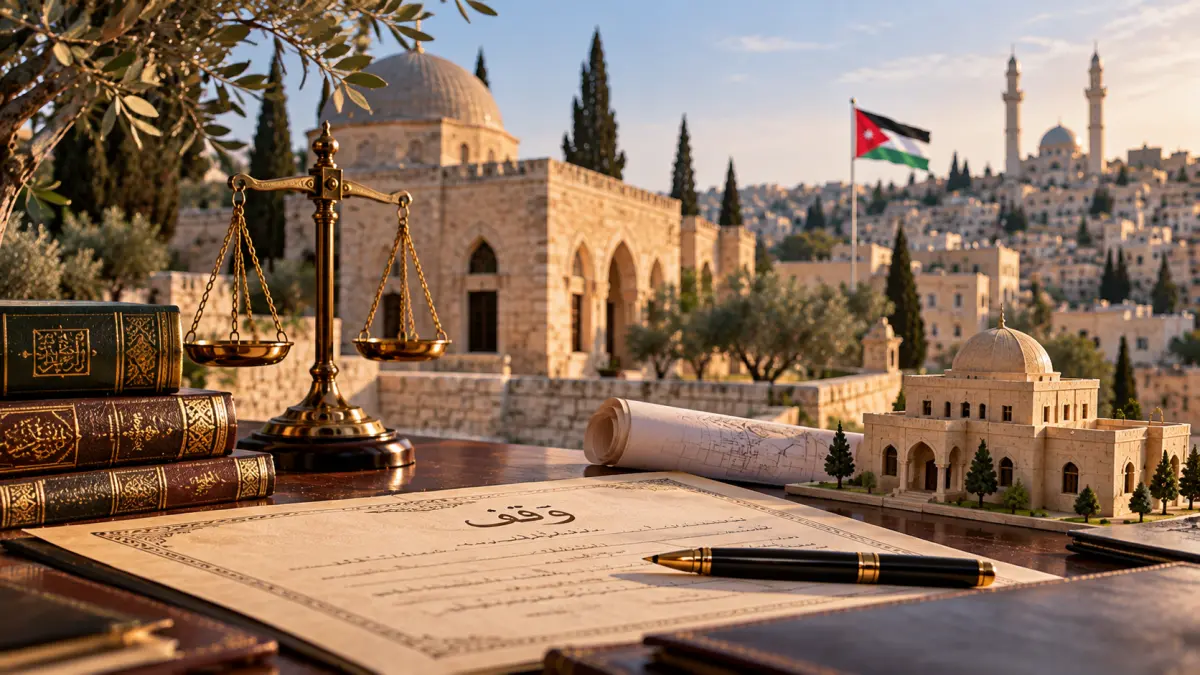
islamic waqf endowment cases jordan
Islamic Waqf & Endowment Cases in Jordan
Islamic waqf is a distinctive legal institution through which property or assets are dedicated for a purpose recognized under Sharia principles. Unlike an ordinary property transaction, a waqf can create continuing rights and obligations involving the endowed property, beneficiaries, the person responsible for administration and the conditions originally established by the founder of the waqf.
Because these arrangements may continue for many years or even generations, disputes concerning waqf property can involve complex questions of Sharia law, property documentation, administration and beneficiary rights.
Al-Jamal Law Office provides legal advice and representation concerning Islamic waqf and endowment cases in Jordan, assisting individuals, families, beneficiaries, administrators and other interested parties with the establishment, interpretation, administration and litigation of waqf matters.
Jordan has a specific legal and institutional framework governing Islamic endowments. The official Department of the Chief Justice confirms that Jordanian Sharia courts have jurisdiction over the creation of waqf by Muslims, its conditions, trusteeship and administration, substitution of endowed property and disputes concerning the validity of waqf and rights arising from it.
The Jordanian Ministry of Awqaf, Islamic Affairs and Holy Places also has institutional responsibilities concerning Islamic endowments in Jordan and identifies the care of Islamic waqf among its principal functions.
Establishment and Conditions of a Waqf
The terms under which a waqf was created are central to determining how the endowed property should be administered.
Jordan's Sharia judiciary expressly identifies the creation of waqf, its conditions and trusteeship over it among matters falling within Sharia-court jurisdiction.
A waqf document may specify the property dedicated, the intended purpose, the persons or categories entitled to benefit and conditions governing administration.
Legal issues can therefore arise when there is disagreement about the meaning of a condition, the identity of a beneficiary or whether a proposed action involving the endowed property is consistent with the original waqf arrangement.
Al-Jamal Law Office reviews the relevant waqf deeds, Sharia records, property documents and supporting evidence to determine the legal status of the arrangement and the procedure applicable to the issue.
Disputes Concerning Waqf Property
The official Jordanian Sharia judiciary specifically recognizes disputes concerning waqf and its validity within the jurisdiction of the Sharia courts. It also identifies proceedings concerning the creation and replacement of waqf property and disputes over waqf among cases considered by the Sharia appellate system.
A dispute may concern whether a property is legally subject to a waqf, whether the waqf was validly created, the extent of the endowed property, or the legal consequences arising from the waqf.
Particular care may be necessary when a party claims private ownership of property that another party considers endowed property.
The Department of the Chief Justice explains that where a private ownership claim is made concerning disputed real estate while a waqf deed, waqf judgment or other recognized evidence of waqf exists, questions concerning ownership may need to be dealt with before the competent court while the Sharia proceeding is handled according to the applicable procedural rules.
This makes documentation especially important in disputes involving endowed real estate.
Administration and Trusteeship of Waqf
Waqf disputes are not limited to determining whether an endowment exists.
Jordan's Sharia jurisdiction also extends to matters concerning التولية على الوقف, or trusteeship/administration of the waqf, as well as issues related to its internal administration.
Questions may therefore arise concerning the authority of the person administering the waqf, compliance with the conditions governing the endowment, management of waqf assets or decisions affecting beneficiaries.
The appropriate procedure depends on the waqf instrument, the nature of the property and the particular administrative issue in dispute.
Beneficiary Rights
A family or charitable waqf may identify particular persons, classes of beneficiaries or purposes that are entitled to benefit from the endowed assets.
Disagreement may develop concerning whether a person qualifies as a beneficiary, how a condition should be interpreted or whether the administration of the waqf complies with its governing terms.
These matters should not automatically be treated as ordinary inheritance disputes.
A waqf and a deceased person's estate can involve members of the same family, but the legal status of endowed property may be different from property forming part of an ordinary estate.
Waqf, Estates and Inheritance
The distinction between waqf property and estate property can become particularly important after a death.
If an asset is validly subject to a waqf, determining rights in that asset may require applying the rules governing the endowment rather than simply treating the property as part of the deceased person's distributable estate.
Where the same matter also involves ordinary estate assets, clients may require our Estate Settlement & Distribution service. If a disagreement arises between heirs concerning ordinary estate property, our Inheritance Disputes Between Heirs service may also be relevant.
Separating these legal questions helps avoid treating every family property disagreement as a conventional inheritance case.
Jordanian Ministry of Awqaf
In addition to the jurisdiction exercised by the Sharia judiciary, the Ministry of Awqaf, Islamic Affairs and Holy Places performs important functions concerning Islamic endowments in Jordan.
The Ministry states that it is responsible for caring for Islamic waqf in the Kingdom and identifies Law No. 32 of 2001 on Awqaf, Islamic Affairs and Holy Places among the principal laws regulating its work. Its published strategic materials also identify provisions concerning waqf in the Jordanian Civil Code among the legislation relevant to the Ministry's work.
The competent institution and procedure in a particular matter will depend on whether the issue concerns judicial determination, administration, property, documentation or another aspect of the waqf.
Waqf Lawyer in Jordan
Al-Jamal Law Office's Sharia Law Services include representation in personal-status, inheritance and Islamic-law matters. Our dedicated waqf service provides focused legal assistance for clients whose issue concerns an Islamic endowment or endowed property.
Our services may include reviewing waqf deeds and historical documentation, examining beneficiary rights, advising on trusteeship and administration, evaluating disputes concerning endowed assets, preparing Sharia court proceedings and representing clients before the competent judicial authorities.
Individuals, families, beneficiaries or administrators seeking an Islamic waqf lawyer in Jordan, facing a waqf property dispute, or requiring legal advice concerning the establishment, administration or interpretation of an Islamic endowment can contact Al-Jamal Law Office for advice based on the particular documents and circumstances of the waqf.
Official Legal Sources
For authoritative information, clients may consult the Jordanian Department of the Chief Justice, its information concerning Sharia court jurisdiction, and the Jordanian Ministry of Awqaf, Islamic Affairs and Holy Places.
These official resources provide the legal and institutional framework for Islamic waqf matters in Jordan, while the appropriate procedure in an individual case depends on the specific waqf deed, property, parties and dispute involved.